When it comes to hay quality, lignin is one of the most important – and least understood – components.
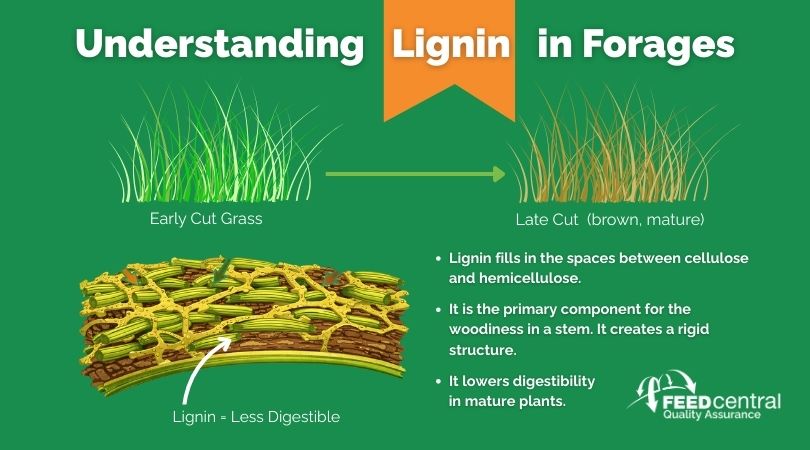
Lignin is the tough, woody part of the plant cell wall. It gives plants structure as they mature, but nutritionally, it’s essentially indigestible. Even more importantly, lignin binds to digestible fibre, reducing the overall energy animals can extract from the feed.
In summer, lignin becomes particularly relevant.
Hot conditions accelerate plant maturity, meaning pastures can become stemmy very quickly. As plants move from leafy growth to seed head, lignin levels rise. Drought and heat stress can also thicken cell walls, further increasing fibre and reducing digestibility.
The result? Hay that looks acceptable but delivers less energy than expected.
Different forage crops have different lignin values. It’s important to know exactly what you’re measuring to understand your feed test results. For example, fresh Lucerne forage has a range from 2.3-12.28%, while fresh Sorghum forage has a range from 2.9-6.18%.
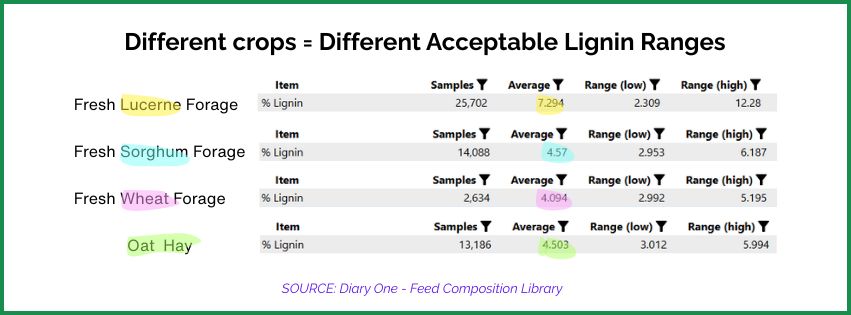
This excerpt from the Dairy One – Feed Composition Library shows the range of lignin figures for different forage crops.
Higher lignin levels are typically reflected in elevated ADF results on a feed test, which means lower digestibility. For producers, this can translate to:
Dry stock maintaining rather than gaining
Lactating animals underperforming
Growing stock not hitting targets
High-lignin hay isn’t “bad”. This hay can be ideal for maintenance animals or easy-keepers. But without testing, it’s impossible to match hay quality to livestock needs with confidence.
Summer-made hay should never be judged on colour alone. Testing removes the guesswork and ensures you’re feeding for performance, not just filling a feeder.