NDF and ADF. They sound technical. They are technical. But once you understand what they really measure, they become two of the most powerful numbers on your feed test.
Whether you’re feeding horses, cattle, sheep or goats, NDF and ADF tell you how much your animals can eat — and how much energy they’ll get from it.
Let’s break it down.
First, What Are We Actually Measuring?
Hay is made up of two main parts:
- Cell contents – sugars, starches, protein, fats (the highly digestible stuff)
- Cell wall – fibre (the structural part of the plant)
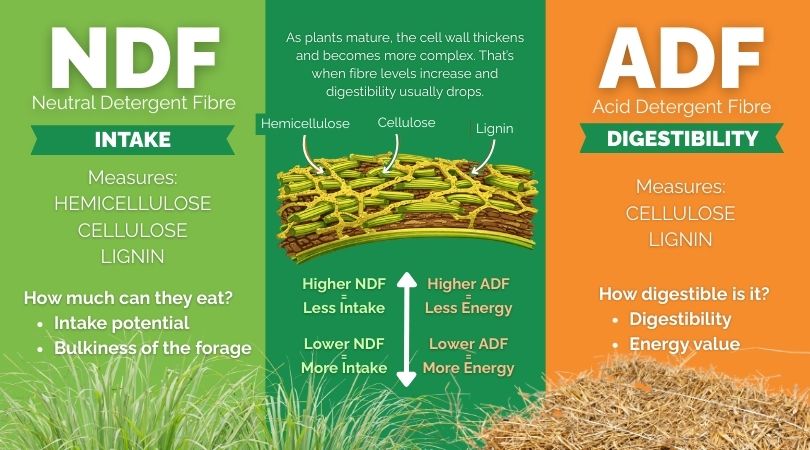
As plants mature, the cell wall thickens and becomes more complex. That’s when fibre levels increase and digestibility usually drops.
NDF and ADF are measurements of that fibre fraction.
They’re part of what’s called the detergent fibre analysis system, developed to better understand forage quality beyond crude fibre (which is now considered outdated and less useful).
What Is NDF? (Neutral Detergent Fibre)
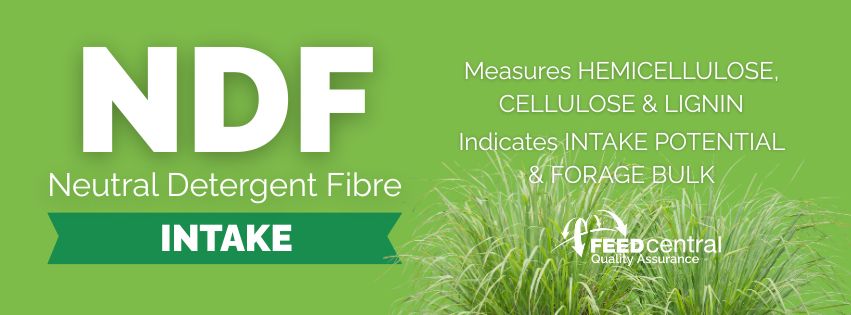
NDF measures the total cell wall content of the forage.
It includes hemicellulose, cellulose and lignin.
Think of NDF as the “how much can they eat?” number.
Why?
Because NDF is strongly related to intake.
As NDF increases:
- The forage becomes bulkier
- It takes longer to break down in the rumen or hindgut
- Animals physically can’t consume as much
High NDF = reduced voluntary intake
Lower NDF = animals can generally eat more
Practical Example
- A lactating cow or growing animal needs higher intake → moderate NDF (often 35–45% depending on species and forage type)
- An “easy keeper” horse that gains weight easily → higher NDF forage (50–65%) may be useful to limit calorie intake while maintaining gut health
NDF helps you match forage to the animal’s nutritional demand.
What Is ADF? (Acid Detergent Fibre)
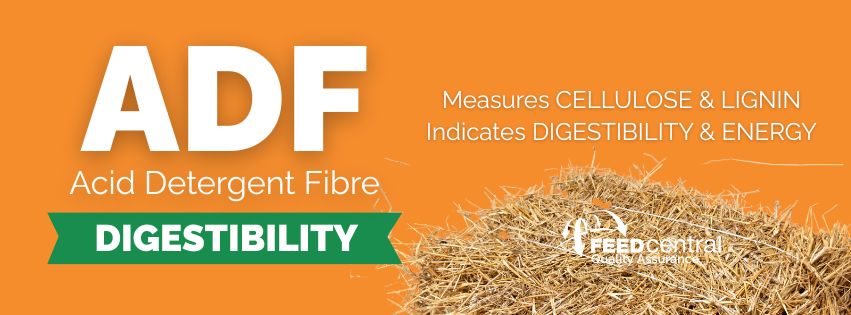
ADF measures a smaller portion of the fibre fraction.
It includes cellulose and lignin. It does not include hemicellulose.
Think of ADF as the “how digestible is it?” number.
As ADF increases:
- Digestibility decreases
- Energy availability drops
High ADF = lower digestible energy
Lower ADF = higher digestibility and energy value
This is why ADF is often used to estimate Total Digestible Nutrients (TDN) or digestible energy.
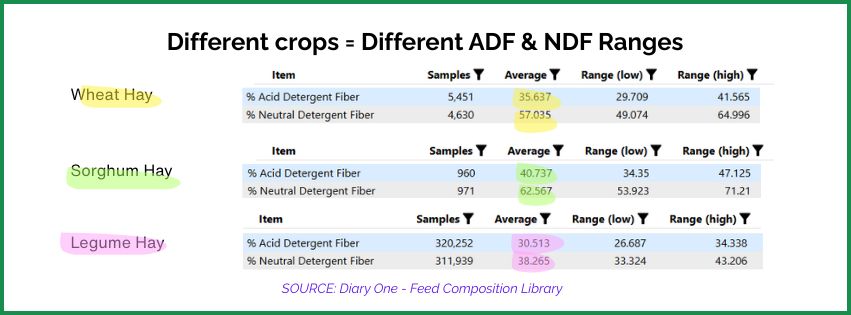
How NDF and ADF Work Together
These two numbers tell a story when viewed side by side.
- NDF = intake potential
- ADF = digestibility and energy potential
For example, a hay sample with:
- High NDF and high ADF → mature, stemmy, lower-energy hay
- Moderate NDF and moderate ADF → balanced forage
- Lower NDF and lower ADF → early cut, leafy, higher-energy hay
The gap between NDF and ADF represents hemicellulose, which is generally more digestible than cellulose and lignin.
When that gap narrows, it often indicates a more mature, lignified plant.
Why Maturity Matters
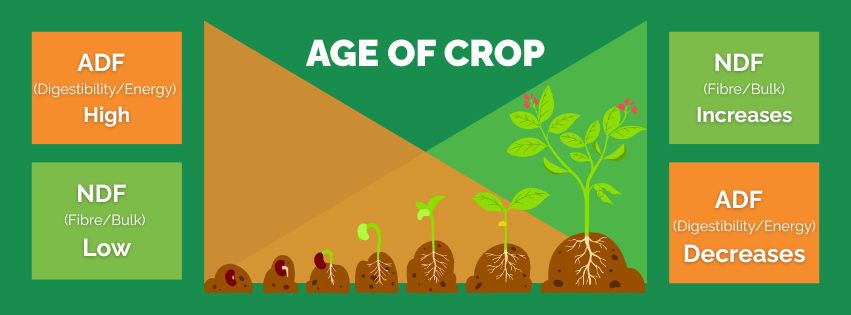
As plants mature:
- Fibre increases
- Lignin increases
- ADF rises
- NDF rises
- Digestibility falls
That’s why two bales of hay that look similar can feed very differently.
Early-cut lucerne hay might test NDF: 38% and ADF: 30%, and late-cut might be NDF: 50–55% and ADF: 38–42%.
Early-cut grass hay might test NDF: 45–55% and ADF: 28–35%, and late-cut might be NDF: 65% and ADF: 42%. (Grass fibre climbs quickly with maturity, so the gap between early and late cuts can be quite pronounced.)
It’s important to remember that even if they look similar in the paddock, nutritionally there can be a huge difference.
Species Matters Too
Different animals use fibre differently.
Ruminants (cattle, sheep, goats)
Microbes in the rumen ferment fibre into volatile fatty acids — a major energy source. They can utilise moderate fibre well, but intake still limits performance.
Horses
Horses ferment fibre in the hindgut. They rely heavily on fibre for gut health, but energy intake must be managed carefully — especially for performance horses or easy keepers.
The “ideal” NDF and ADF numbers vary depending on:
- Species
- Stage of production
- Body condition goals
- Overall diet composition
There is no single perfect number.
What NDF and ADF Don’t Tell You
While powerful, these measurements don’t give the full picture.
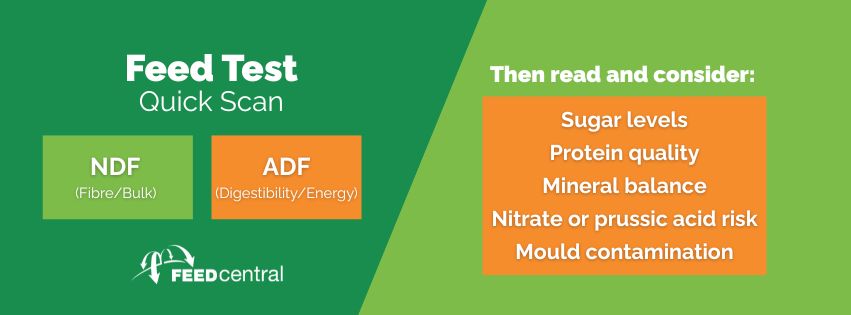
They don’t directly measure:
- Sugar levels
- Protein quality
- Mineral balance
- Nitrate or prussic acid risk
- Mould contamination
That’s why a complete feed test matters.
But if you’re scanning a report quickly, NDF and ADF are two of the first numbers worth looking at.
Common Misunderstandings
“Lower fibre is always better.”
Not necessarily. High-performance animals may need more digestible forage, but horses prone to laminitis or overweight animals often benefit from higher fibre hay.
“All grass hay is high fibre.”
Not always. Early-cut grass can test similarly to moderate lucerne.
“Crude fibre is enough.”
Crude fibre underestimates total fibre and does not reflect intake or digestibility as accurately as NDF and ADF.
Practical Takeaway
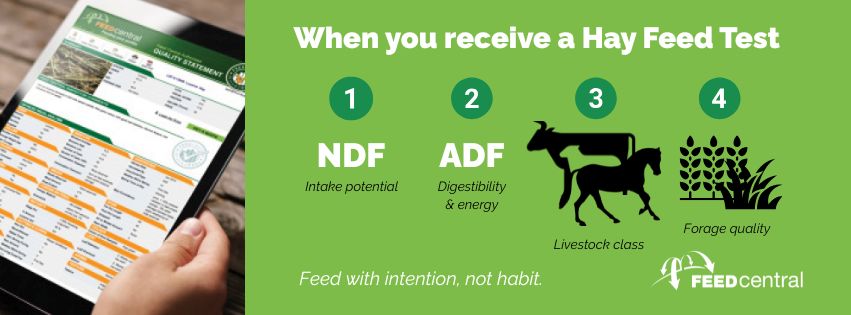
When you receive a hay test:
- Look at NDF to estimate intake potential
- Look at ADF to estimate digestibility and energy
- Consider the class of livestock you’re feeding
- Match forage quality to nutritional demand
Feed testing removes guesswork.
NDF and ADF remove assumptions.
Because hay isn’t just hay – it’s a structural carbohydrate package that can either support performance or quietly limit it.
Understanding these two numbers helps you feed with intention, not habit.